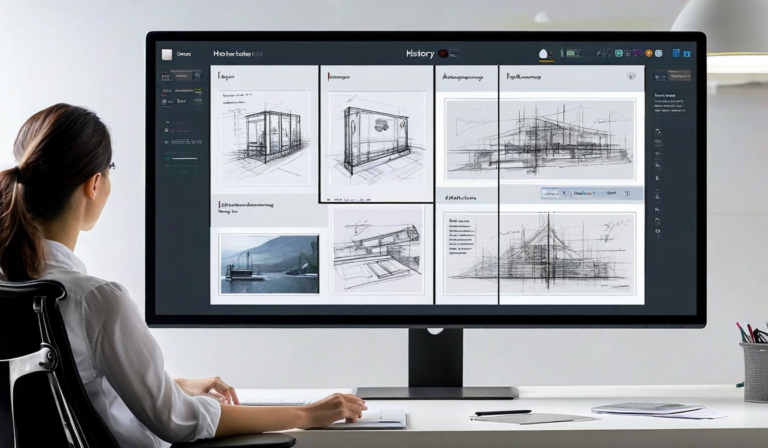
Google Drive is where design files go to accumulate. Most teams we talk to have a Drive structure that started with good intentions — organized by client, by project, by year — and evolved into something that requires institutional knowledge to navigate. You know which folder the latest brand guidelines are in because you've been on the team for three years. A new hire couldn't find it without a guided tour.
This is a known failure mode of general-purpose cloud storage when it's used for design work. Drive is an excellent file system. It was never designed to understand design artifacts, manage review states, track feedback across versions, or give a client a structured way to approve work. When you use it for those things anyway, you're patching with process what should be handled by infrastructure.
What Google Drive Actually Does Well
Before making the case for switching, it's worth being honest about what Drive does well, because teams have legitimate reasons for staying with it:
- Universal access. Every stakeholder already has a Google account. No onboarding required.
- Storage cost. Drive storage is essentially free at the scale most teams operate at.
- Simplicity. Files go in folders. Everyone understands folders.
- Non-design file handling. Briefs, contracts, invoices, meeting notes — Drive handles these well and they're legitimately part of the project.
The case for moving isn't that Drive is bad. It's that using Drive for creative review workflow is the wrong tool for the job, and the workarounds required to make it work — naming conventions, manual version management, email-based feedback — are a tax on every project.
The Migration: What It Actually Takes
Teams moving from Drive to a dedicated creative workspace typically go through the same three phases:
- Active project migration (Week 1-2). Move current active projects first. Don't try to migrate your entire Drive history. Get current work into the new environment, establish the workflow, and let teams build habits around live projects rather than archived ones.
- Client onboarding (Week 2-3). The first client review in the new system is the real test. Set expectations in advance: "We're sharing this via our new review platform — no account required, just click the link and drop your notes directly on the design." The first experience should be zero-friction.
- Archive strategy (Ongoing). Old projects don't need to move. Drive can remain the long-term archive for completed work. The goal is to redirect new and active projects to a better workflow, not to retroactively reorganize years of history.
What Changes After the Switch
The changes teams report after moving away from Drive-based workflows are consistent. Review cycles are faster because feedback is collected in the same place as the design. Version confusion drops because there's one authoritative current version rather than multiple copies in different folders. Client approvals are trackable because sign-off is a defined action, not a verbal "looks good" in a video call.
The most unexpected change is in client relationships. When clients can annotate designs directly and see their feedback acknowledged and addressed in the same workspace, they feel more like collaborators and less like external reviewers. That shift in dynamic is worth more than any specific feature.
The Drive folder structure doesn't go away entirely — it's still a useful archive and a home for non-design documents. But it stops being the creative workflow. And that distinction, once made, is hard to undo. Teams that make it rarely go back to managing design review through a combination of shared folders, email threads, and filename conventions. Not because the old way was terrible, but because the new way is clearly better — and better is hard to unsee.