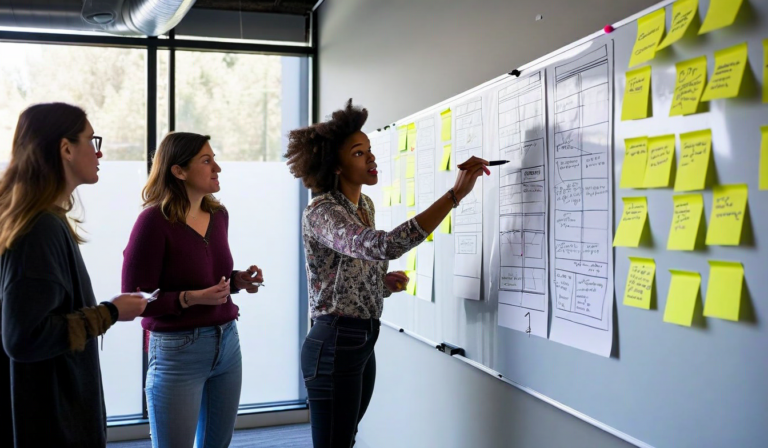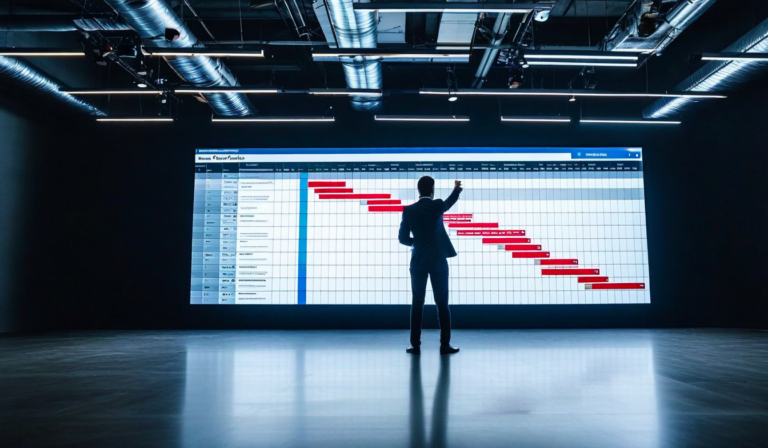

The creative industry has always worked in bursts of collaboration separated by periods of focused solo work. The design review meeting, the client presentation, the critique session — these are synchronous moments by necessity. But the ratio has been off for a long time. Too many synchronous touchpoints for work that doesn't require them, and not enough intentional async communication for the things that actually benefit from it.
Remote work accelerated this reckoning. When everyone moved out of the office, teams discovered that a lot of meetings weren't meetings at all — they were status updates, or questions that could have been a comment thread, or decisions that could have been made with a shared doc and a two-day response window. The shift to async-first isn't about being remote. It's about respecting that creative work requires uninterrupted focus time, and meetings fragment that time in ways that compound across a week.
What Async Collaboration Actually Means
Async-first doesn't mean never meeting. It means starting with the assumption that communication doesn't need to be simultaneous unless the work specifically benefits from real-time back-and-forth. Some things do. Exploratory brainstorming, high-stakes decision-making, conflict resolution — these often warrant a call. But most day-to-day creative collaboration doesn't.
The practical test: before scheduling a meeting, ask whether the goal could be achieved with a recorded Loom, a shared design file with annotations, or a written brief with a response window. If yes, default to the async version. Reserve synchronous time for work that genuinely requires it.
The Design Review Case for Async
Design reviews are where async collaboration has the most obvious upside. The traditional model — schedule a 45-minute Zoom with the client, share your screen, walk through the design, collect verbal feedback in the moment — seems efficient but has a significant hidden cost: the quality of feedback in real-time presentations is lower than the quality of feedback given with reflection time.
When a client sees a design for the first time in a meeting, they're forming opinions under social pressure. They know the designer is watching. They know they're expected to respond. This leads to feedback that's faster, shallower, and more first-impression-driven than the feedback they'd give if they had 48 hours to think about it, revisit it, and annotate it at their own pace.
We've seen teams cut their revision rounds by sharing designs asynchronously with a 48-hour annotation window before any discussion. The feedback quality is meaningfully higher because reviewers aren't performing for an audience — they're thinking.
Building Async Culture on a Creative Team
Async doesn't happen by default. It requires some explicit norms. The ones that work best:
- Write briefs, not bullets. A good async brief has enough context that the recipient doesn't need to ask clarifying questions before starting. Short bullets are efficient to write and inefficient to act on.
- Set response windows, not urgency. "Please review by Thursday EOD" is clearer and less stressful than a message with an urgent flag. People plan around deadlines; they can't plan around urgency markers.
- Record decisions where they're made. A decision in a Slack thread that isn't reflected in the design file or brief has no staying power. Within 48 hours, nobody will remember which thread it was in.
- Default to over-communicating context. In async work, the most common failure is assuming shared context that isn't actually shared. If in doubt, add the sentence of explanation. The reader can skip it if it's obvious; they can't recover it if it's missing.
Async-first creative collaboration is a compounding advantage. Teams that build the habit ship work with fewer meetings, retain more focused creative time, and produce better feedback loops because reviewers engage on their own terms rather than under time pressure. It takes about six weeks to feel natural after a team commits to it. The teams we've seen make the switch almost never go back.